
Reducing greenhouse gas emissions and contributing to the circular economy are the main objectives of this initiative developed by Fraunhofer Chile and funded by Corfo through the Crea y Valida program.
The primary aluminum production industry generates 1.1 billion tons of greenhouse gases annually, accounting for 2% of global emissions. Conventional recycling reduces the energy required for the process by 95%, and therefore its emissions. However, it is not free of emissions, releasing half a ton of CO₂ into the environment for every ton of recycled aluminum.
The smelting process requires the highest energy consumption, which inspired the RENOVAL project: a solar aluminum recycling furnace developed by research engineers at Fraunhofer Chile.
By concentrating solar radiation directly onto a furnace located at the focal point, common aluminum waste—such as beverage cans, window frames, and engine pistons—can be melted without any need for other energy sources like fossil fuels.
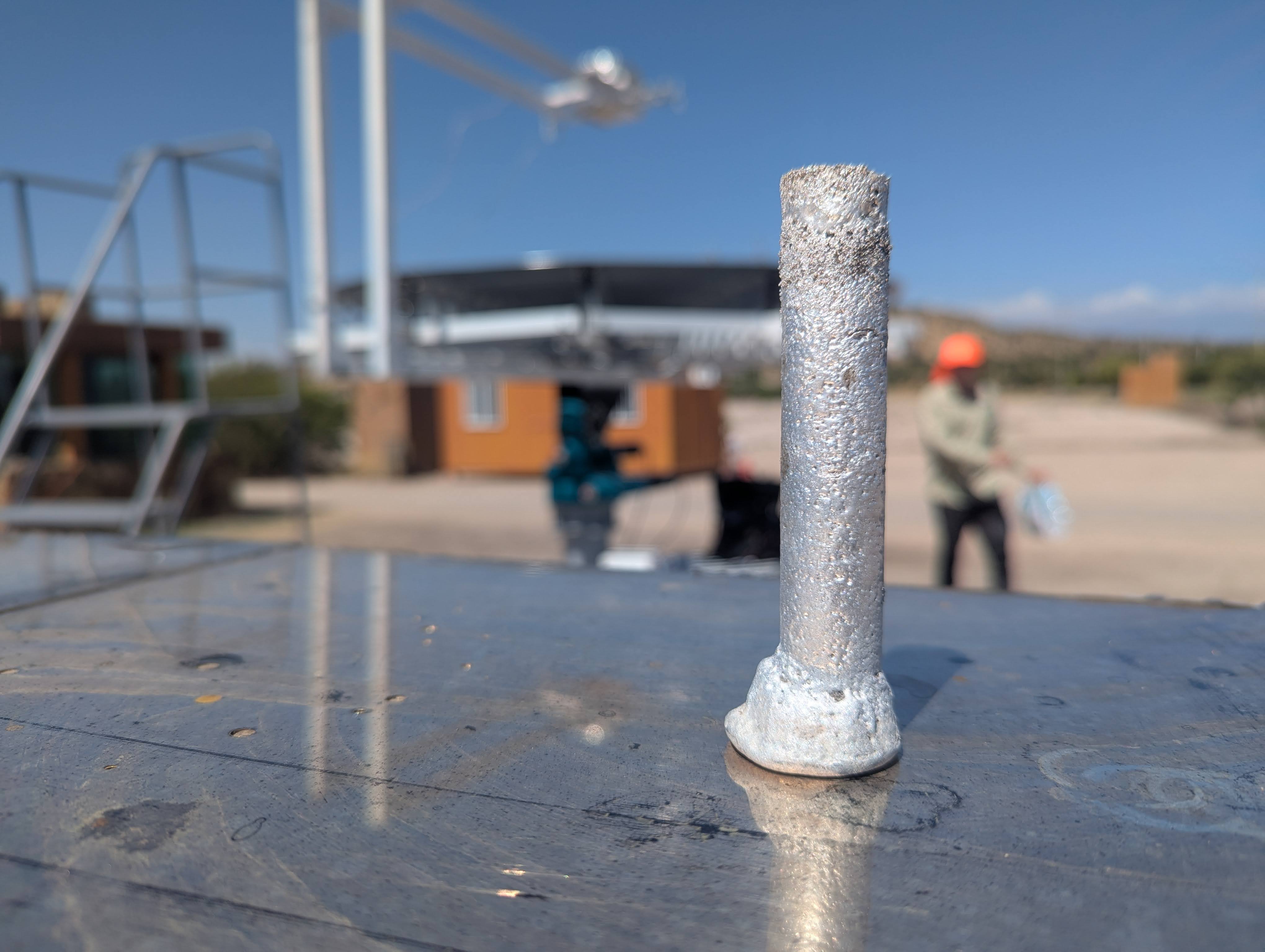
After several months of work, and through various stages of R&D, the challenges related to design, manufacturing, assembly, testing, and commissioning of the prototype have been overcome, successfully achieving aluminum melting using solar energy.
The ultimate goal is to scale up the prototype with a fully constructed unit capable of melting diverse aluminum alloys at different capacities. The greater ambition: to eliminate the dependence on fossil fuels in metal smelting processes and to contribute to the circular economy through sustainability and renewable energy.
The project is funded by Corfo through the Crea y Valida program.