
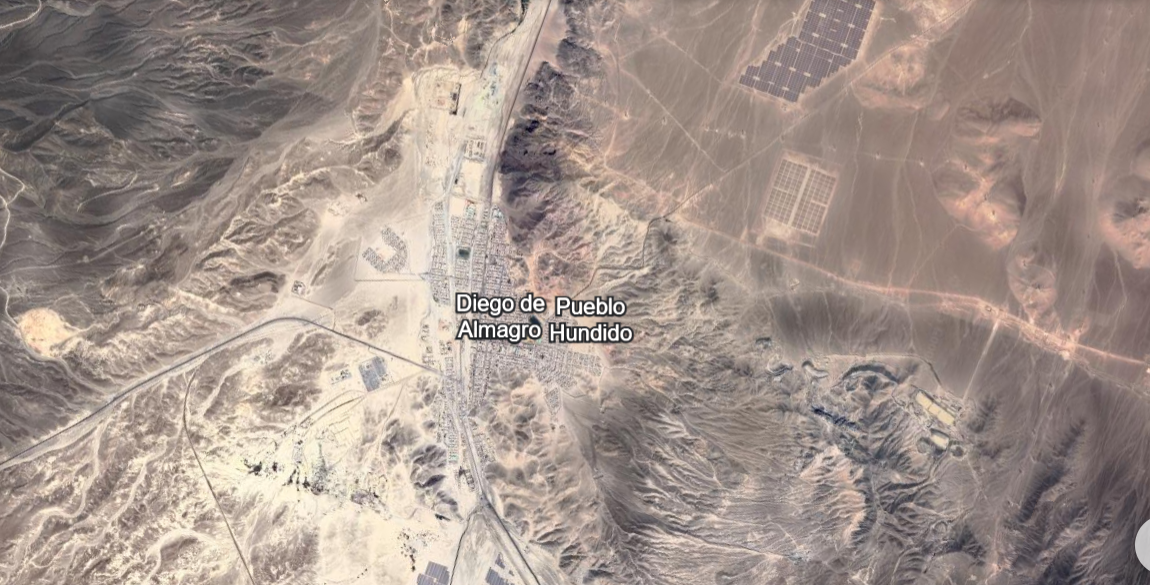
With the aim of designing a solar city, studies and a pilot plant were carried out in the city of Diego de Almagro, in northern Chile, to maximize the use of this renewable energy for the benefit of the community.
The project Corredor Solar de la Cuenca del Salado, focused on the municipalities of Diego de Almagro and Chañaral, consisted of developing a model city with high solar energy penetration, based on self-sufficiency and distributed generation across public buildings, homes, and the local productive economy.
The initiative was based on the study Estrategia Energética Local de Diego de Almagro, carried out by Fraunhofer Chile as a result of joint work with the community.
The purpose of designing a “solar city” model was to enable its replication in other areas of the country with high potential for this sustainable resource.
The project was developed in collaboration with the Centro de Energía de la Universidad de Chile, the Facultad de Ingeniería, Fraunhofer ISE, and the Planes y Proyectos UC group of the Pontificia Universidad Católica de Chile. Together, they conducted a series of studies aimed at benefiting both citizens and the local productive environment.
Additionally, a pilot plant was installed to simulate proposals and determine the efficiency of supplying solar energy to the city through independent panels or a community plant.
This initiative was funded by the “Bienes Públicos para la Competitividad” program of Corfo, within the framework of the Solar Energy Program Roadmap. Its sponsors were the Ministerio de Energía and the Asociación Chilena de Energía Solar (ACESOL).