
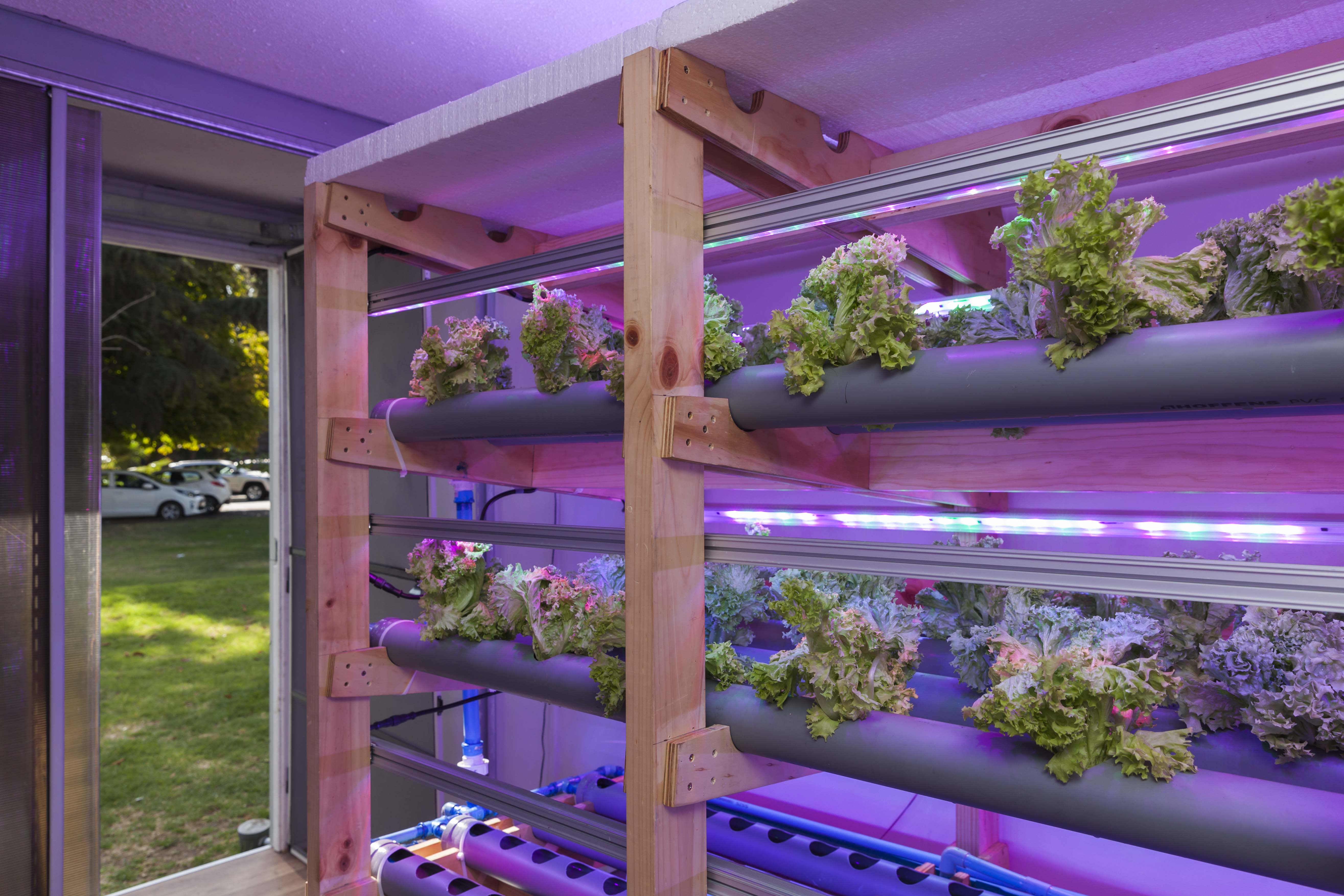
In 2019, Fraunhofer Chile introduced a new paradigm for urban agriculture with the Urban Farm PV concept. This innovative system fuses vertical hydroponics with solar photovoltaic energy within a controlled environment, creating a self-sustaining ecosystem designed to optimize water and energy consumption for crop production.
Backed by funding from the Metropolitan Regional Government, the initiative launched its first pilot in the Municipality of Quinta Normal. This unit operated under a community-focused model, where local residents were trained to manage the module, empowering them to grow their own food and fostering local self-sufficiency.
Inside, the system featured a high-efficiency hydroponic setup capable of producing 300 heads of lettuce, alongside an automated seedling nursery. To ensure optimal conditions, the crops were illuminated by 24 LED bars, providing a light spectrum specifically tailored to maximize plant growth and yield.
Externally, the container was powered by 12 photovoltaic panels (320 Wp each), delivering a total capacity of 3,820 Wp. Notably, these modules were mounted on a sustainable wooden structure, custom-designed by the Center for Wood Innovation at the Pontifical Catholic University of Chile.
Expanding the project’s impact, a second pilot unit was transferred to Urbana Grow, a small business founded by young entrepreneurs from the Metropolitan Region, demonstrating the commercial viability of this technology for local startups.