
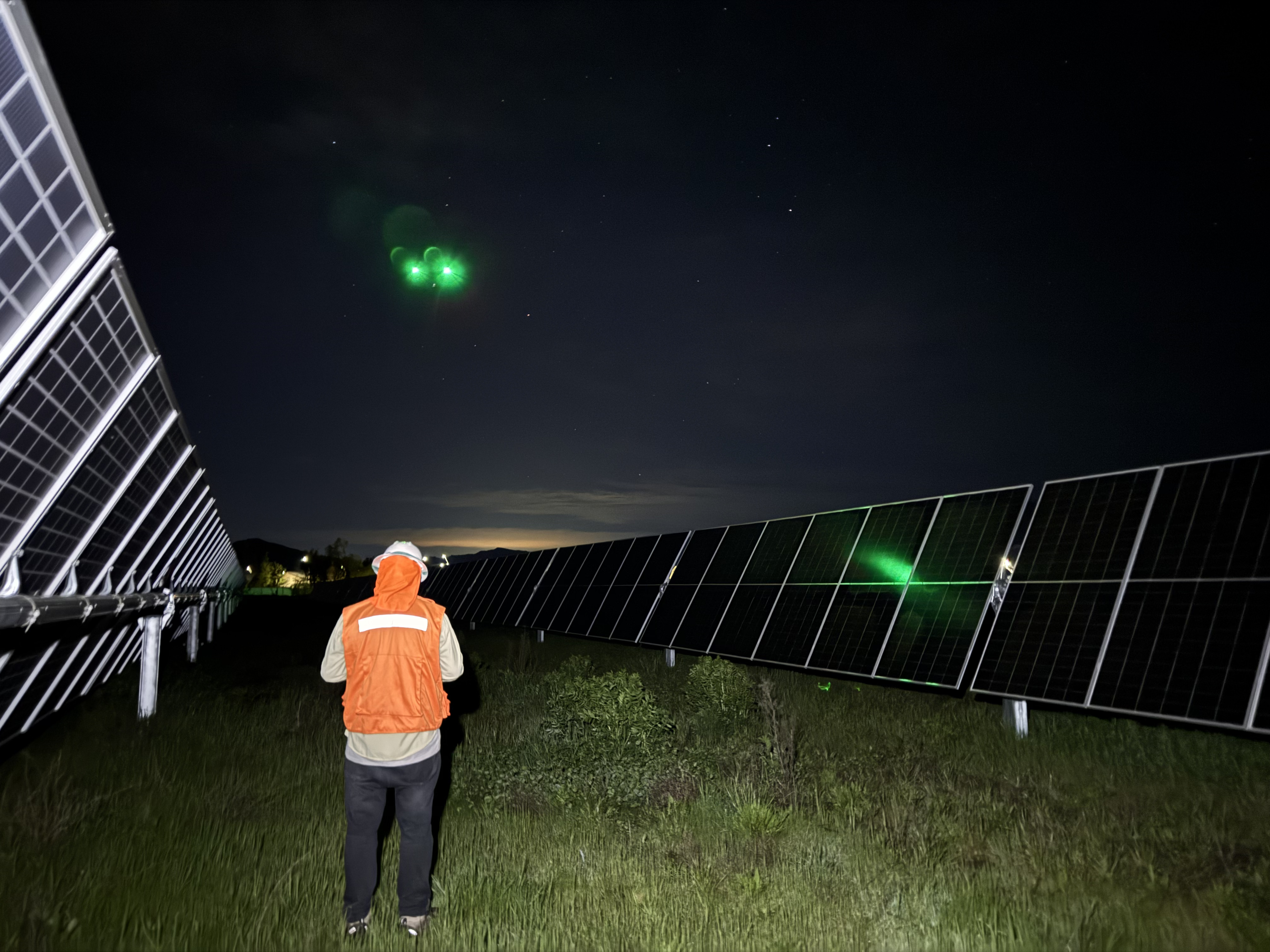
As Chile accelerates its commitment to shut down 50% of its coal-fired power plants by 2025, photovoltaic technology has moved to the center stage of the energy transition. To ensure the long-term sustainability of this booming industry, Fraunhofer Chile created DeepScan.
Funded by Corfo through the Crea y Valida program, this advanced monitoring system replaces slow, manual inspections with a high-tech combination of drones and deep learning. Its primary mission is to automate the early detection of failures, extending module lifespans and enabling smarter, timely maintenance decisions.
The inspection process begins in the air, where a drone equipped with a specialized camera scans the plant using electroluminescence (EL). Unlike standard visual checks or thermography, EL uses electricity to effectively "X-ray" the solar cells. Functioning cells emit light, while damaged areas appear dark, allowing the system to pinpoint microscopic irregularities and internal defects that remain invisible to the naked eye.
Once the flight is complete, the digital magic happens. Images are enhanced, cropped, and segmented for clarity before being processed by advanced software powered by Convolutional Neural Networks (CNNs). Using a pre-trained algorithm, the system automatically classifies panels as defective or functional with an accuracy exceeding 90%. By generating detailed reports automatically, DeepScan eliminates tedious manual data entry and drastically reduces human error, providing the scalable innovation required for the solar industry's continued expansion.